
Long-distance patient transportation means moving a patient over an extended distance using a suitable vehicle, usually an ambulance equipped according to the patient's needs.
This service may be required for:
Transferring patients from one hospital to another.
Taking patients from Dhaka to their hometowns.
Bringing patients from district hospitals to Dhaka.
Transporting elderly or bedridden patients.
Moving patients after surgery or medical treatment.
Taking patients home after hospital discharge.
Transferring patients who need oxygen or medical monitoring.
The appropriate transport arrangement depends on the patient's condition. A doctor should assess whether the patient is fit to travel and what level of medical support is required during the journey.
Different patients require different transportation facilities. Before booking, explain the patient's condition to the ambulance provider and ask which vehicle and equipment are appropriate.
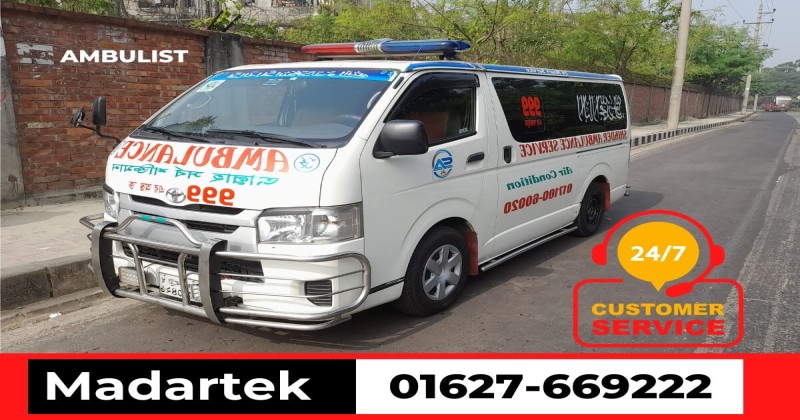
An AC ambulance provides an air-conditioned environment for patient transportation. It may be suitable for patients who need to travel comfortably over long distances but do not require advanced life-support equipment.
Common uses include:
Hospital discharge transportation.
Travel to another city for medical appointments.
Transportation of elderly patients.
Long-distance journeys for patients who can travel without intensive medical support.
A Non-AC ambulance is another option for patient transportation. It may be suitable for certain patients who do not require air conditioning or advanced medical facilities.
Before booking, confirm the vehicle's condition, stretcher arrangement, available space, and suitability for the patient's journey.
An ICU ambulance is designed for patients who need a higher level of medical support during transportation. Depending on the vehicle and service provider, it may have facilities such as patient monitoring equipment, oxygen support, and other critical-care equipment.
It may be considered for patients who require close observation or advanced support during a hospital-to-hospital transfer.
A life support ambulance may be appropriate for patients who need medical assistance and monitoring during transportation. Available facilities vary between providers.
Before confirming the booking, ask about the equipment, trained medical personnel, and support available for the patient's specific condition.
Some patients require supplemental oxygen during travel. An ambulance with oxygen support may be suitable when prescribed or recommended by the treating doctor.
Confirm the oxygen supply capacity, expected journey duration, backup arrangements, and whether the ambulance team can manage the patient's oxygen requirements.
Families may need long-distance patient transportation in several situations.
A patient may need to move from a local hospital to a specialized hospital in Dhaka or another city. The receiving hospital should be contacted in advance to confirm that it can provide the required treatment.
Many patients receive treatment in Dhaka and later need to return to their homes in other districts. A suitable ambulance can help transport them from the hospital or residence to their destination.
Patients from outside Dhaka may need transportation to specialized hospitals, diagnostic centres, or other healthcare facilities in the capital.
Elderly people and patients who cannot sit or walk independently may need stretcher-based transportation with suitable assistance.
Some patients need an ambulance after surgery or hospital discharge. The treating doctor should confirm the patient's fitness to travel and explain any special requirements.
Proper preparation helps families organize a smoother journey. For patients with serious or unstable conditions, the treating medical team should coordinate the transfer.
Ask the doctor whether the patient is fit for the journey. Discuss the expected travel time, possible complications, required medical support, and whether a medical professional should accompany the patient.
Choose an ambulance according to the patient's condition. Do not select a vehicle based only on price or appearance. Confirm the necessary equipment and trained personnel before booking.
Keep important documents ready, including:
Hospital discharge summary.
Prescriptions and medication list.
Recent test reports.
X-ray, CT scan, or MRI reports when relevant.
Doctor's transfer instructions.
Patient identification and emergency contact details.
Carry prescribed medicines and any supplies recommended by the doctor. Ask the medical team about medication timing during the journey, food and water restrictions, and any special care instructions.
Make sure someone is available at the destination to receive the patient. If the patient is going to another hospital, confirm admission or receiving arrangements before departure.
Tell the provider the patient's age, condition, pickup address, destination, required equipment, and estimated travel distance. Mention any oxygen requirements, mobility limitations, or special medical needs.
The World Health Organization emphasizes stabilization, suitable staffing, equipment, planning, and communication when transporting critically ill patients.
Patient safety should remain the main priority throughout the journey.
Follow the treating doctor's instructions before departure.
Ensure the patient is properly secured on the stretcher.
Confirm that required medical equipment is available and working.
Make sure oxygen and other necessary supplies are sufficient for the journey, with appropriate backup arrangements.
Keep medical documents and emergency contacts accessible.
Confirm that the ambulance team understands the patient's condition.
Plan the route and allow for possible traffic delays.
Arrange appropriate monitoring and medical assistance according to the patient's condition.
Inform the receiving hospital or family about the expected arrival time.
Do not begin a journey with an unstable patient without appropriate medical assessment and transfer arrangements.
For critically ill patients, transport planning should be coordinated by qualified healthcare professionals. A regular patient transport vehicle may not be suitable for someone who needs intensive medical care.
Dhaka is a major destination for specialized healthcare in Bangladesh. Patients from different districts often travel to the capital for treatment, while many patients return home after completing their hospital care.
A long-distance ambulance service from Dhaka may help with transportation to:
Chattogram
Cumilla
Feni
Noakhali
Lakshmipur
Chandpur
Barishal
Patuakhali
Khulna
Jashore
Rajshahi
Bogura
Rangpur
Dinajpur
Mymensingh
Sylhet
Habiganj
Sunamganj
Faridpur
Madaripur
Gopalganj
Tangail
Manikganj
Gazipur
Narayanganj
Narsingdi
Actual service availability depends on the ambulance provider, vehicle, route, and booking schedule. Always confirm the pickup location, destination, and travel arrangements before departure.
Booking an ambulance becomes easier when you provide complete information.
Step 1: Contact an ambulance provider
Call the service provider and explain that you need long-distance patient transportation.
Step 2: Provide pickup and destination details
Share the hospital or home address, destination district, and any important route information.
Step 3: Explain the patient's medical condition
Mention whether the patient can sit, needs a stretcher, requires oxygen, or needs ICU-level support.
Step 4: Confirm the ambulance facilities
Ask about air conditioning, stretcher arrangements, medical equipment, oxygen supply, and accompanying medical staff where required.
Step 5: Confirm the total cost
Ask for the complete estimated fare. Clarify whether tolls, fuel, waiting time, return travel, and additional medical support are included.
Step 6: Confirm the booking
Verify the pickup time, vehicle type, driver contact number, and expected arrival arrangements.
The cost of long-distance patient transportation is not the same for every journey. Several factors can affect the final fare.
Travel distance: Longer journeys generally involve higher transportation costs.
Ambulance type: AC, Non-AC, ICU, and life-support ambulances may have different rates.
Medical equipment: Oxygen, monitoring equipment, and other special facilities may affect the cost.
Medical staff: A doctor, nurse, or trained medical attendant may involve additional charges.
Waiting time: Delays at hospitals or pickup locations may increase the total cost.
Road and route conditions: Traffic, tolls, and road conditions can affect travel time and expenses.
Return arrangements: One-way and round-trip bookings may have different pricing.
Always request a clear quotation before confirming the service. Do not assume that the initial quoted amount includes every additional charge.
Choosing a suitable ambulance provider is important for patient comfort and safety.
Consider the following points before booking:
Ask whether the provider serves your required route.
Confirm the ambulance type and available facilities.
Check whether the stretcher is suitable for the patient.
Ask about trained attendants or medical professionals.
Confirm oxygen and monitoring arrangements when required.
Request a complete fare estimate.
Verify pickup time and driver contact information.
Check whether the provider can coordinate with the receiving hospital.
A reliable booking process should include clear communication about the patient's needs, journey arrangements, facilities, and costs.
Long-distance patient transportation is the movement of a patient between different cities, districts, hospitals, or homes using a suitable ambulance or medical transport vehicle.
Yes. Some ambulance providers offer transportation from Dhaka to different districts of Bangladesh. Confirm your destination, vehicle availability, and fare directly with the provider.
A stretcher-equipped ambulance may be suitable, but the correct vehicle depends on the patient's medical condition and ability to tolerate travel. Consult the treating doctor before booking.
Some ambulances provide oxygen support. Confirm the oxygen supply, capacity, backup arrangements, and medical assistance with the provider before departure.
No. An ICU ambulance is generally considered when the patient's condition requires advanced monitoring or critical-care support. The treating doctor should recommend the appropriate transport level.
The fare depends on distance, ambulance type, equipment, medical staff, waiting time, and route. Contact the provider for a journey-specific quotation.
Yes. Families can arrange ambulance transportation for patients returning home after hospital discharge, subject to the patient's medical condition and the provider's service availability.
Long-distance patient transportation requires proper planning, suitable ambulance facilities, and clear communication between the family, treating hospital, transport team, and receiving facility. Whether a patient needs to travel from Dhaka to another district or from a district hospital to a specialized medical centre, selecting the right ambulance is an important part of the transfer process.
Before booking, discuss the journey with the treating doctor, explain the patient's condition, confirm the required facilities, and ask for a clear quotation. These steps can help families arrange more appropriate and organized patient transportation.
Ambu-list helps people find ambulance service information and emergency contact details in Bangladesh. Explore ambulance service listings and contact a provider to discuss your transportation requirements.
Ambu-list – Find Ambulance Services and Emergency Contact Numbers in Bangladesh
Long-distance patient transportation is an important healthcare service for people who need to travel from one city, district, or hospital to another for medical treatment, follow-up appointments, rehabilitation, or home care.
Phone : 017100-60020
Address : Mogbazar Rd, Dhaka
Visit : shikderambulance.com


.jpg)
